Showing posts with label The Living Dead. Show all posts

Friday, August 21, 2020

Wild Fridays #33: The Living Dead

 
My Dog

You foolish creature charging in
To flop in my chair with your lop-sided grin,
You chew my shoes and eat my socks:
I’m sure your head is made of rocks.
I plant, you dig my flowers and lawn,
You bark when the roosters crow at dawn.
You chase the baker, you bit the rector,
But you seem to adore the bill-collector.
Chaos comes with you through the door–
You are a clown and not much more.

But when I sit by the fire at night
And the world is mostly sleeping,
My thoughts caught up in fancied flight,
Then gently you come creeping.

You sit and stare at me above you,
Your tongue tip soft as a feather,
And I stretch my hand to prove I love you–
A man and his dog together.

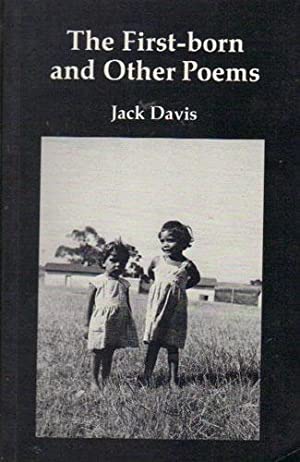
Jack Davis (1917-2000)
from The First-born and Other Poems. 
(Melbourne, J. M. Dent Pty. Limited, 1983.)


Some light relief after all the serious stuff I've been dishing up lately. Yes it has been pointed out that not everyone wants light relief and some welcome the more nitty-gritty offerings  – still, I think most of us respond to animal poems in any circumstances.

As many of you know, I'm a cat person really, but that doesn't mean I don't like dogs too. It's just that I like really big dogs, and it wouldn't be practical for me to have one of them now, though I have in the past. (Not enough funds or space any more.)

But if I can't have a dog, I can enjoy reading about other people's. And middle-sized dogs are nice too. I picture the one in Davis's poem as being middle-sized – maybe a Blue Heeler or a Labrador ... but most probably a bitzer. Heelers and Labs aren't quite as silly as this endearingly troublesome fellow.

I love the deceptive simplicity of Davis's poetry and his mastery of rhyme and rhythm. In this poem I like the way he changes both the rhythm and the rhyme scheme in the middle, reflecting the change in both mood and substance from the rollicking first verse to something more relaxed and thoughtful. 

He was an Aboriginal Australian who lived in Perth (Western Australia) and was even better known as  a playwright. You can read the details of his life and career at the Wikipedia link on his name (above). Or read the concise version here on the back cover of this book.


I bought my copy of The First-born when it was first published, and still enjoy re-reading it. The book includes many fine poems of mourning and protest about the post-colonial fate of black Australians, but I'll leave them for another day. (Sadly, decades after these writings, the issue doesn't look like being solved awhile yet.) 


~~~~~~~~~~~~


A Change

"All is flux, nothing stays still." 
Plato

Sanaa, who has graced us for a year and more with her thoughtful and inspiring prompts, tells us she needs to bow out from the team for personal reasons. She's got a lot going on at present and feels she can no longer be as useful to the group as she'd like. I'm sure we'll still see her and her poetry around the traps. Meanwhile we thank her for her contributions to us all and to our writing, and we wish her very well.

"Nothing is lost. . .Everything is transformed."
― Michael Ende, The Neverending Story


Material shared in 'The Living Dead' is presented for study and review. Poems, photos and other writings and images remain the property of the copyright owners, where applicable (older poems may be out of copyright).

Friday, July 24, 2020

Wild Fridays #29: The Living Dead

Winter
– Czeslaw Milosz (1911-2004)

The pungent smells of a California winter,
Grayness and rosiness, an almost transparent full moon.
I add logs to the fire, I drink and I ponder.

“In Ilawa,” the news item said, “at age 70
Died Aleksander Rymkiewicz, poet.”

He was the youngest in our group. I patronized him slightly,
Just as I patronized others for their inferior minds
Though they had many virtues I couldn’t touch.

And so I am here, approaching the end
Of the century and of my life. Proud of my strength
Yet embarrassed by the clearness of the view.

Avant-gardes mixed with blood.
The ashes of inconceivable arts.
An omnium-gatherum of chaos.

I passed judgment on that. Though marked myself.
This hasn’t been the age for the righteous and the decent.
I know what it means to beget monsters
And to recognize in them myself.

You, moon, You, Aleksander, fire of cedar logs. 

Waters close over us, a name lasts but an instant. 
Not important whether the generations hold us in memory. 
Great was that chase with the hounds for the unattainable meaning of the world. 

And now I am ready to keep running 
When the sun rises beyond the borderlands of death. 

I already see mountain ridges in the heavenly forest 
Where, beyond every essence, a new essence waits. 

You, music of my late years, I am called 
By a sound and a color which are more and more perfect. 

Do not die out, fire. Enter my dreams, love. 
Be young forever, seasons of the earth.


From Selected and Last Poems 1931-2004. Selected by Robert Haas and Anthony Milosz, translated by Anthony Milosz. USA, HarperCollins (Ecco) 2006; UK, Penguin Classics, 2014.

 
I'm in the middle of reading this book at present, a recent purchase.  It's a wonderfully full volume in both length and content. These poems deserve some pondering (to use his own word). Seamus Heaney, another great 20th Century poet, says in his foreword, 'From start to finish, merciless analytic power coexisted with helpless sensuous relish.'

Milosz witnessed and survived German Naziism and the early days of Russian Communism. And he lived long enough to be aware of humanity's environmental destructiveness. Some of his poems are understandably bleak (despite his strong Catholic faith). Others, however, display that 'sensuous relish' Heaney mentions. I chose this one partly because it is so positive and so visionary, partly because of what it suggests about being a poet.


Wikipedia tells us: 
 
Czeslaw Milosz ... was a Polish-American poet, prose writer, translator, and diplomat. Regarded as one of the great poets of the 20th century, he won the 1980 Nobel Prize in Literature. In its citation, the Swedish Academy called Miłosz a writer who "voices man's exposed condition in a world of severe conflicts".
Miłosz survived the German occupation of Warsaw during World War II and became a cultural attaché for the Polish government during the postwar period. When communist authorities threatened his safety, he defected to France and ultimately chose exile in the United States, where he became a professor at the University of California, Berkeley. His poetry—particularly about his wartime experience—and his appraisal of Stalinism in a prose book, The Captive Mind, brought him renown as a leading émigré artist and intellectual.
Throughout his life and work, Miłosz tackled questions of morality, politics, history, and faith. As a translator, he introduced Western works to a Polish audience, and as a scholar and editor, he championed a greater awareness of Slavic literature in the West. Faith played a role in his work as he explored his Catholicism and personal experience.
Miłosz died in Kraków, Poland, in 2004. He is interred in Skałka, a church known in Poland as a place of honor for distinguished Poles.

The article expands to a lot more detail about his life and work. If you'd like the extra information, click this link.

Meanwhile here is Jane Hirshfield reading the poem, after which she gives a very interesting analysis of it. Yes, I know we all hated the way poems were pulled apart at school. This is on a different level, being for adult students, and is done with great respect and love for the poem as well as deep understanding.


Material shared in 'The Living Dead' is presented for study and review. Poems, photos and other writings and images remain the property of the copyright owners, where applicable (older poems may be out of copyright).

This photo of Czeslaw Milosz is by Artur Pawlowski, made available under Creative Commons licence CC BY-SA 4.0


Friday, June 19, 2020

Wild Fridays #24: The Living Dead


Ars Poetica 

A poem should be palpable and mute   
As a globed fruit,

Dumb
As old medallions to the thumb,

Silent as the sleeve-worn stone
Of casement ledges where the moss has grown—

A poem should be wordless   
As the flight of birds.

                         *               

A poem should be motionless in time   
As the moon climbs,

Leaving, as the moon releases
Twig by twig the night-entangled trees,

Leaving, as the moon behind the winter leaves,   
Memory by memory the mind—

A poem should be motionless in time   
As the moon climbs.

                         *               

A poem should be equal to:
Not true.

For all the history of grief
An empty doorway and a maple leaf.

For love
The leaning grasses and two lights above the sea—

A poem should not mean   
But be.

 Archibald MacLeish (1892 - 1982)


The last two lines of this famous poem are often quoted on their own – which in some contexts can make them sound pretentious and even meaningless 
(irony unintended).

The whole poem was recently referenced by a member of the Haiku on Friday facebook group. Looking at it again, I realised that, though one might very well take issue with it as regards poetry in general, it is a very apt prescription indeed for haiku: the immediacy, the grounding in sensual experience.

Its recommendations perfectly exemplify ’show, don’t tell’. But isn’t that what we’re advised to do with all our writing? So perhaps it is a good recipe for poetry in general, after all. Why, then, did I suggest one might take issue with that?

Oh, I think there are many valid ways to approach poetry. I've noticed that, just when someone seems to have formulated the definitive rules for writing excellent poetry, someone else will come along and break them – in brilliant poetry.

MacLeish himself later departed from the position he took in Ars Poetica. Wikipedia, in its comprehensive  account of his life and work, says, 

MacLeish's early work was very traditionally modernist and accepted the contemporary modernist position holding that a poet was isolated from society. His most well-known poem, "Ars Poetica," contains a classic statement of the modernist aesthetic: "A poem should not mean / But be." He later broke with modernism's pure aesthetic. MacLeish himself was greatly involved in public life and came to believe that this was not only an appropriate but an inevitable role for a poet.

Best known as a poet, he was also a playwright and prose writer. His poetry won a number of awards, including the Pulitzer Prize three times and the French Legion of Honour. Wikipedia gives us further details of his distinguished career:

MacLeish studied English at Yale University and law at Harvard University. He enlisted in and saw action during the First World War and lived in Paris in the 1920s. On returning to the United States, he contributed to Henry Luce's magazine Fortune from 1929 to 1938. For five years MacLeish was Librarian of Congress, a post he accepted at the urging of President Franklin D. Roosevelt. From 1949 to 1962, he was Boylston Professor of Rhetoric and Oratory at Harvard University

He instituted great, much-needed reforms at the Library of Congress and began the appointments which would grow into the position of Poet Laureate. As a former librarian myself, I particularly love what he had to say about books and libraries:

When he was seventy-four years old the Cretan novelist Nikos Kazantzakis began a book. He called it Report to Greco ... Kazantzakis thought of himself as a soldier reporting to his commanding officer on a mortal mission—his life. ...

Well, there is only one Report to Greco, but no true book ... was ever anything else than a report. ... A true book is a report upon the mystery of existence ... it speaks of the world, of our life in the world. Everything we have in the books on which our libraries are founded—Euclid's figures, Leonardo's notes, Newton's explanations, Cervantes' myth, Sappho's broken songs, the vast surge of Homer—everything is a report of one kind or another and the sum of all of them together is our little knowledge of our world and of ourselves. Call a book Das Kapital or The Voyage of the Beagle or Theory of Relativity or Alice in Wonderland or Moby-Dick, it is still what Kazantzakis called his book—it is still a "report" upon the "mystery of things."
But if this is what a book is ... then a library is an extraordinary thing. ...
The existence of a library is, in itself, an assertion. ... It asserts that ... all these different and dissimilar reports, these bits and pieces of experience, manuscripts in bottles, messages from long before, from deep within, from miles beyond, belonged together and might, if understood together, spell out the meaning which the mystery implies. ...
The library, almost alone of the great monuments of civilization, stands taller now than it ever did before. The city ... decays. The nation loses its grandeur ... The university is not always certain what it is. But the library remains: a silent and enduring affirmation that the great Reports still speak, and not alone but somehow all together ...

Meanwhile, I wonder what you think of his pronouncements in the poem I’ve shared. What do you feel poetry is, or should be?

If you decide to write your own ars poetica (a poem about poetry) please don’t link to it in the comments here, as that doesn’t work very well, but save it for a Sunday, when you can share it more effectively in Writers’ Pantry.


~~~~~~~~~~~~~~


Material shared in 'The Living Dead' is presented for study and review. Poems, photos and other writings and images remain the property of the copyright owners, where applicable (older poems may be out of copyright).

This photo of Archibald MacLeish is in the Public Domain.

Friday, May 1, 2020

Wild Fridays #17: The Living Dead

Messenger

My work is loving the world.
Here the sunflowers, there the hummingbird—
equal seekers of sweetness.
Here the quickening yeast; there the blue plums.
Here the clam deep in the speckled sand.

Are my boots old? Is my coat torn?
Am I no longer young, and still half-perfect? Let me
keep my mind on what matters,
which is my work,

which is mostly standing still and learning to be
astonished.
The phoebe, the delphinium.
The sheep in the pasture, and the pasture.
Which is mostly rejoicing, since all the ingredients are here,

which is gratitude, to be given a mind and a heart
and these body-clothes,
a mouth with which to give shouts of joy
to the moth and the wren, to the sleepy dug-up clam,
telling them all, over and over, how it is
that we live forever.

Mary Oliver (1935-2019)


In whatever sense she meant that last line, perhaps not even Mary Oliver would be thinking now that we live forever – not even as a species ... not even, perhaps, the planet as a whole. (She left us before the fires in Australia last year, or the plague throughout the whole world this year.)

And yet, I doubt she was referring to physical mortality; but rather, perhaps, an experience of the ineffable.

In any case, it's been a long April – for some of us gamely producing a poem a day, and for all of us dealing with the strange new reality we inhabit of lockdowns and compulsive hand-washing, sudden loss of income for many, and the horrifying numbers of the sick and dead.

I won't dwell more on the facts of the pandemic; we all know them too well by now. And those of us who have been responding to poetry prompts this April (applause, applause! take a bow) have oftentimes touched on aspects of the pandemic. How could we not? Though some, at least some of the time, have turned to more positive subject matter as a counter-balance; often the beauty and soothing powers of nature.

I thought we could all use a little more of that at this point. For me, no-one does it better than Mary Oliver. I well remember coming across her book, House of Light in a library in 1993, my first discovery of her work. I was completely enraptured, indeed amazed. I have had no cause to respond any differently since. She never disappoints. She always uplifts.

She did her work well, of loving the world. And she wrote of it for us, so that we can do it too. The world has not been entirely devastated yet; even the human race has not been annihilated yet, nor succeeded in destroying everything else. There are still plums, in the right season; there are still hummingbirds somewhere, and sunflowers, and clams. If I stay alive long enough, I'll know a few more years of them, and of moths, pastures, etc.

Just for now, after this long and often frightening April, I invite you to stop, take a moment, and let the late Mary Oliver (who will live as long as there are readers) remind you how to love the world while it exists and we are here in it.

As she said memorably in another poem ('The Summer Day'):

'I do know how to pay attention ...
which is what I have been doing all day.
Tell me, what else should I have done?'

and (say it with me)

'Tell me, what is it you plan to do
with your one wild and precious life?'


Photo © Rosemary Nissen-Wade 2019. (I've posted pictures of Mary herself at other times I've featured her. I thought this post called for an image of the natural world. I hope it doesn't matter that this is the Australian rather than the American outdoors.)


Material shared in 'The Living Dead' is presented for study and review. Poems, photos and other writings and images remain the property of the copyright owners, where applicable (older poems may be out of copyright).

Friday, April 3, 2020

Wild Fridays #13: The Living Dead


the head next to mine on the pillow       
                                                                                              for Gloria
When I awoke in the morning
There on the pillow beside me lay the moth.
His fluffy head was still tucked down
Like a late sleeper’s, but the eyes, those fascinated
Lamps that had drunk so deep of light
During the night, the eyes were dull.
And a soft powder had fallen
From the tattered wings folded
In the high final dive.

I might have been, perhaps,
The last thing he saw as the light flooded
His gentle body—why, yes, it could be
I was a big thing in his life at the last,
Enigmatic as an Easter Island statue,
Before the tide took him out
To where there is only flying
And all the filaments are friendly.

– Bruce Dawe (1930-2020)
from Condolences of the Season: selected poems. Melbourne, Longman Cheshire, 1971.


Bruce Dawe died just before midnight on April 1st, survived by his second wife and the four children of his first marriage.

Although he was 90, I’m saddened and shocked, as is the Australian poetry world in general. He was one of our most popular poets as well as one of the most critically acclaimed, and his work (widely taught in schools for decades now) will surely live on.

He himself left school early – but after some years in the RAAF (Royal Australian Air Force) went to University as a mature age student, eventually obtained four degrees, and became an associate professor at the University of Southern Queensland. The University goes into detail about his literary career here. Wikipedia gives more biographical details. 

He is known for creating a poetry of the common man, written in the vernacular and dealing with the ordinary minutiae of life. Some of his best-loved poems are social commentary, including many with an anti-war theme. He is often funny and/or satirical, and can be caustic.

A Sydney Morning Herald article from 16 years ago quotes him:

Poetry for me doesn't come from some divine inspiration, all that sort of thing. I don't believe all that romantic stuff. A poet is not a shaman. My 'inspiration' comes from certain things that will take hold of me, bugging away at me, maybe national events, or maybe local things, or something really personal like love.

I write a poem to sort something out, to come to terms with something, from the need to get that something inside out there, so that we can see its shape, its character. Sometimes when we see its shape, whether it's something good or something bad, it can help. Art is therapeutic, in a way, for all of us.

Fiction writer Laurie Clancy, writing in The Sydney Morning Herald 11 years ago, said of him:

He writes about major issues, true. But he is not afraid of the day to day, of what critics like to call the quotidian, and every experience, even the apparently minor, is grist to his mill.
He writes about deadbeats and drifters and the homeless, about popular culture, from Gary Cooper to Butch Cassidy to Australian football, about "the rowdy carnival of sparrows" as well as the Dogs in the Morning Light. In Homo Suburbiensis he writes affectionately about the mundane nature of suburban life.
I would say he is the most Australian of poets – which makes it difficult to know what to share of his work. English speakers on different continents may think we speak the same language; but not really. I’ve found in the past that I have to be careful what Australian poems I share here. Some which I think are splendid just can’t be communicated properly to anyone of another nationality. Dawe’s best-loved poems tend to come into that category, for both their language and their allusions, even though to Australian readers they are eloquent and far from obscure.

The tender poem about the dead moth, though, will hopefully touch all hearts.  It’s not his most famous, nor is the one which follows, but I find them beautiful – and it’s perhaps fitting I should choose a poem about death to honour his own passing. So let’s finish with this one, about sleep, from the same book:


letting go of things

Beautiful, ah always so 
—this letting go of things, this
kneeling, no, prostration of the spirit,
in rehearsal of our last
mysterious release, the sacrament of death,
drifting now as then at evening’s end,
consciousness calling quits, the body’s abrupt
mechanism slowing, slowing, workmen going home,
acquiescence of limbs at the approach of Id,
the garrulous old night-watchman, taking over,
settling down among the weird
luminosities of sleep, guardian of the shadow-factory,
God’s confederate I trust, and must.

Beautiful, O beautiful to be thus
a source of pleasure, if involuntary,
something for an old man to doze over,
to be young again in the dark warm with voices
alive with quicksilver kisses, tears,
tigers running through dream-woods
and impossible poetry.


Books by and about Bruce Dawe can be found at Amazon; including several children’s books he wrote, some of which are available as audiobooks. The paperbacks of his poetry are available at Amazon in the USA, UK and Australia (I haven’t looked elsewhere). Unfortunately none are in Kindle editions. A few of his poems may be found at PoemHunter (where he is listed as Donald Bruce Dawe, his full name by which he was never known).

Material shared in 'The Living Dead' is presented for study and review. Poems, photos and other writings and images remain the property of the copyright owners, where applicable (older poems may be out of copyright).