Showing posts with label Wild Fridays. Show all posts

Friday, August 28, 2020

Wild Fridays #34: Moonlight Musings


A Change of Scene

Dear friends, this is my last Friday post; after, amazingly, nearly nine years of them. But don’t worry, I’m not retiring from the team. I’ll be popping up to (hopefully) entertain and inspire you at other times, in other ways, with a bit more – much-needed – space between commitments. [This is not a result of Sanaa leaving us; we worked out the new system before she resigned. I like to think it may have given her the freedom to make that decision, knowing it wouldn’t now create burdens on the rest of us.]


The Value of Community

At this point I find myself reflecting on these years in which I went from a shy, awkward newcomer  – which I hope I managed to conceal fairly well – to a long-term member of this administrative team and this broader community.

I began, like everyone else, as one who enjoyed the prompts. Then the ‘I Wish I’d Written This’ spot became vacant, coinciding with my thought that many fine Aussie poets deserved wider recognition. Robb (our founder) let me give it a go. Gradually I included other poets (even dead ones, as in ‘The Living Dead’) and then other topics. 

Some poems I didn’t exactly wish I’d written, because I wouldn’t have wanted to be in the place they came from, but I was enthusiastic about them anyway and keen to share them, so the ‘Thought Provokers’ segment was born. Recently it occurred to me that things which interest me when I’m ‘Roving the Web’ would interest other writers too. ‘Words from Our Community’ came from a wish to acknowledge what wonderful poetry happens right here amongst ourselves.

Mutual understanding

Fellow team members have always been happy to let me rave on about anything I cared to. When I decided to do just that, airing my thoughts on various matters to do with poetry, or with writing in general, in the form of my so-called ‘Moonlight Musings’ (which tended to happen late at night) I was pleasantly surprised to find that those posts quickly became everyone’s favourites. When I was writing them, I often feared that no-one would find my ramblings the least bit interesting, but after all it became apparent that writers do very much share the same preoccupations. I guess that in itself is one aspect of the value of community, perhaps the greatest value. Who else can we talk to about all that stuff, and receive complete understanding, but others of our kind?

Discussion

I’ve run a number of writing workshops offline over the years, and still preside over a couple – though lately they’ve had to happen by video. I like to keep things fairly relaxed, with lots of laughter. (And sometimes tears, as people find their writing taking them to emotional places.) Writing happens at these events, and in between them. People find ways to improve particular pieces, and their writing in general grows and develops. Many go on to publication. Yet they all say that what they treasure most about our meetings are the conversations, which often range far and wide, and the friendships consequently formed.

It’s similar here, I think, in this loosely-structured yet close-knit online community. Over time we get to know each other – often quite quickly, but certainly over the long haul. Our writing reveals us to each other; it's not a place we can hide.

Revelation

But what is revealed; what is it we can’t hide? I think perhaps the soul. Aspects of our personalities don’t necessarily show. Well, some do – we know who loves their gardens or their God, who is appalled by a certain political figure, who adores cats and who prefers dogs, who’s in love and who is disenchanted … but we only know what details people choose to write. Behind all that, reading someone’s work repeatedly over time, we get a sense of the person beyond those details: the flavour of them, if you like.

Interaction

This sense of the person can happen to some extent with any writing one reads. It happens so much more in a community such as ours, based on interaction with each other: regularly reading and commenting on each other's work. Those who 'link and run' (which I understand happens in some online forums) would miss out on benefits to themselves and their writing – not only because, if they made a habit of it, people would probably stop reading them anyway, but also because there is so much to be gained by exposure to a variety of other writers. It adds to our repertoire and broadens our scope. (Even exposure to bad writing can be incredibly useful, lol. Not that we have any of that here, of course.) When I was running poetry workshops in prison many years ago, I made a point of bringing in a variety of guest poets to work with the participants.  They couldn't get that kind of exposure unless I provided it, and they told me they found it very valuable in expanding their range as poets. They said it opened up vistas. We are fortunate enough to have such vistas readily available. Don't underestimate what you do for others by linking your writing here!

A shared passion

Writing is, as we know, an essentially solitary activity in the actual doing – just oneself, alone with the words. A strange compulsion,  really, to first find the words and then get them as near as we can to perfect. When we’re lucky they come easily, as if given to us, but often we wrestle with them. We have to at least get a first draft down before we can begin to share them with anyone else. And we’re lucky if our nearest and dearest understand either the impulse or the result. Even when they like what we write, can they comprehend the passion for writing itself, why we do it even if it’s unlikely to make us rich or famous – why we not only do it but give it so much of our time and focus? If you’re married to another writer, as I had the good fortune to be – or probably to any kind of artist – that helps. Or if there's someone in your birth family (my Dad scribbled a bit). But otherwise, I don’t like the chances.

A community of writers with whom we interact repeatedly over time not only fills a need but starts to feel like a group of friends, or even a family. I think it’s greatly to be cherished. The fact that we learn from each other – can’t help doing so through our interactions – is a bonus. Then, too, in this international community the wide diversity of backgrounds, interests, lifestyles, and approaches to writing enriches us all.

And the fact that I’ve stayed up much too late – again! – chasing after the Muse? Well I guess that’s a price I’m happy to pay.


 Material shared here is presented for study and review. Poems, photos, and other writings and images remain the property of the copyright owners, usually the authors. (Older poems may be out of copyright). For the photo of the map-reader, found on Unsplash, I thank Leio McLaren.

Friday, August 21, 2020

Wild Fridays #33: The Living Dead

 
My Dog

You foolish creature charging in
To flop in my chair with your lop-sided grin,
You chew my shoes and eat my socks:
I’m sure your head is made of rocks.
I plant, you dig my flowers and lawn,
You bark when the roosters crow at dawn.
You chase the baker, you bit the rector,
But you seem to adore the bill-collector.
Chaos comes with you through the door–
You are a clown and not much more.

But when I sit by the fire at night
And the world is mostly sleeping,
My thoughts caught up in fancied flight,
Then gently you come creeping.

You sit and stare at me above you,
Your tongue tip soft as a feather,
And I stretch my hand to prove I love you–
A man and his dog together.

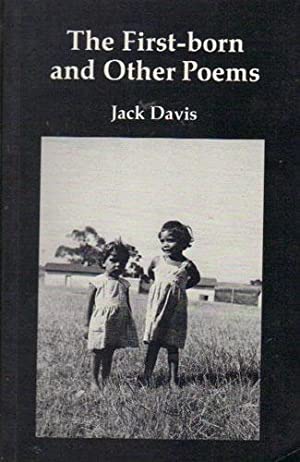
Jack Davis (1917-2000)
from The First-born and Other Poems. 
(Melbourne, J. M. Dent Pty. Limited, 1983.)


Some light relief after all the serious stuff I've been dishing up lately. Yes it has been pointed out that not everyone wants light relief and some welcome the more nitty-gritty offerings  – still, I think most of us respond to animal poems in any circumstances.

As many of you know, I'm a cat person really, but that doesn't mean I don't like dogs too. It's just that I like really big dogs, and it wouldn't be practical for me to have one of them now, though I have in the past. (Not enough funds or space any more.)

But if I can't have a dog, I can enjoy reading about other people's. And middle-sized dogs are nice too. I picture the one in Davis's poem as being middle-sized – maybe a Blue Heeler or a Labrador ... but most probably a bitzer. Heelers and Labs aren't quite as silly as this endearingly troublesome fellow.

I love the deceptive simplicity of Davis's poetry and his mastery of rhyme and rhythm. In this poem I like the way he changes both the rhythm and the rhyme scheme in the middle, reflecting the change in both mood and substance from the rollicking first verse to something more relaxed and thoughtful. 

He was an Aboriginal Australian who lived in Perth (Western Australia) and was even better known as  a playwright. You can read the details of his life and career at the Wikipedia link on his name (above). Or read the concise version here on the back cover of this book.


I bought my copy of The First-born when it was first published, and still enjoy re-reading it. The book includes many fine poems of mourning and protest about the post-colonial fate of black Australians, but I'll leave them for another day. (Sadly, decades after these writings, the issue doesn't look like being solved awhile yet.) 


~~~~~~~~~~~~


A Change

"All is flux, nothing stays still." 
Plato

Sanaa, who has graced us for a year and more with her thoughtful and inspiring prompts, tells us she needs to bow out from the team for personal reasons. She's got a lot going on at present and feels she can no longer be as useful to the group as she'd like. I'm sure we'll still see her and her poetry around the traps. Meanwhile we thank her for her contributions to us all and to our writing, and we wish her very well.

"Nothing is lost. . .Everything is transformed."
― Michael Ende, The Neverending Story


Material shared in 'The Living Dead' is presented for study and review. Poems, photos and other writings and images remain the property of the copyright owners, where applicable (older poems may be out of copyright).

Friday, August 14, 2020

Wild Fridays #32: Roving the Web

Opportunities


Via my inbox (from Tinywords):

Hello tinywords readers and poets! We are now accepting submissions, through the end of August, for our 20th anniversary issue.
To submit haiku, haiga, or other short poetry, use the form here: https://tinywords.com/submit/   
The Editors


On a friend’s Facebook page:


Full details here.


I Wish I'd Written This

But I think it would be overkill to feature Caitlin Johnstone again so very soon, even if Consent Rescinded is a white-hot, brilliant manifesto. And besides I wouldn't be able to find anything illuminating to say about it, as in this she says it all. So you may have a look for yourselves at the link on the title of her piece, above.


Haiku Havens


Those who love haiku and related forms will no doubt already be well aware of the colourful CARPE DIEM HAIKU KAI website, created by the indefatigable 'Chevrefeuille'. I know several people in this community respond to his prompts, as I do myself from time to time. It's also a great source of education about haiku, renga, tanka, etc. etc., imparted in a very readable, easy style. And you can find a number of free downloadable ebooks there too. (Some are by Chevrefeuille's friend and mentor, the noted haiku scholar and haijin, the late Jane Reichhold.) All the links at the top of the page and in the side columns are very interesting to follow. One of them leads to a blog featuring works by the great Basho, and Chevrefeuille's own writings inspired by them.


As you see, GRACEGUTS is the website of Michael Dylan Welch. Unlike Carpe Diem it's not interactive, but here too you can find a wealth of material on haiku and related forms, by Welch himself and others. It's all very detailed and scholarly, and it takes account of the modern 'English language haiku' and such, whereas Chevrefeuille is more traditional in his approach.

I find Carpe Diem a delightful place to play, while Graceguts is endlessly (and to me fascinatingly) informative and includes many excellent examples of haiku.


Material shared here is presented for study and review. Poems, photos, and other writings and images remain the property of the copyright owners, usually the authors.

Friday, August 7, 2020

Wild Fridays #31: I Wish I'd Written This


Do  Not Let Them Train You


Do not let the news man train you how to see.

Do not let the pundit train you how to feel.

Do not let the teacher train you how to think.

Do not let the preacher train you how to love.

Do not let the banker train you how to value.

Do not let Hollywood train you how to be.

Don't let them train you.

They were appointed by the powerful to teach you how to live
in a world that is small, too small for wild humans.


Too small for humans who haven't been house trained,
groomed, spayed and neutered,
and taught parlor tricks
like how to ignore life's intrinsic breathtaking majesty.


Too small for humans who perceive their own boundlessness,
their own vast unpredictable inner wildernesses,
their own beauty,
their own holiness,
their own worthiness,
their own innate equality
with those holding their leash.


So they train us.

They train us to believe the world fits neatly
into flat, finite conceptual boxes.


That life is predictable, that our nature is well-mapped.

That we live in a 2-D colorless cage
from which there can be no escape
and about which everything is known.


As though narrative could even touch this blazing cacophony,
let alone encapsulate it.


They are lying to you, my beloved.

They are lying each and every time they open their pixelated mouths.

This life is so much more than they will ever allow you to believe.

So very immense.

So very unexplored.

So very unpredictable.

So very juicy.

So very sexy.

So very, very, very beautiful.

The unknown unknowns dwarf the known unknowns,
and the known unknowns dwarf the knowns.


But they will never let you know this.

So don't ask their permission.

Take off that leash, wild apeling.

Unblinker those eyes and unshackle those legs.

Those chains are not there to protect you from the world, my beloved.

They are there to protect your trainers

from you.

Caitlin Johnstone


– Yes, her again. Told you I was pretty impressed.

I had been thinking that after all the heavy, serious stuff I've been dishing out of late, you might be due for some relief.  Something sweet and lovely, I thought, as counter-balance to all the stressful and horrifying things we face. Then I saw this. I couldn't not share it. (And after all, we've recently had Sanaa reminding us not to overthink and Rommy inviting us to focus on what makes us smile, so it hasn't been unrelievedly serious around here.)

To be truthful, while I think Caitlin Johnstone is a brilliant journalist, I don't think she's all that wonderful as a poet (though she's not all that bad either). But her journalism has taught her how to make her points powerfully. And oh boy, the things she says! That's what I wish I'd written. 


I think that we poets and storytellers, because our writing teaches us to analyse words and meanings, are probably better than many others at resisting being told how to think and feel. 

The training is insidious, though. When we're bombarded with certain viewpoints over and over, particularly the ones we get from all sides all our lives, do we even realise they're not necessarily (a) correct and true, (b) intrinsic to our human nature, or even (c) arrived at by our own mental processes?

So how do we not let 'them' train us? Perhaps the first step is to be vigilant in noticing when and how they are. We can pay attention to what's entering our heads.

When I was at primary school, we were taught a subject called Clear Thinking – logic for children, applied particularly to the news media. We were taught how to notice the hooks in a headline, or the way an advertisement appealed to the emotions. We learned how to précis a news article to get to the guts of what it was really saying, without all the fluff around that. We learned to recognise when something was presented in 'coloured language', slanted a certain way rather than being told straight. It was very useful stuff!

But it's a long time ago that I was in primary school. It's pretty clear that kids aren't now being taught to read critically like that. Perhaps we need to hone our own critical skills and teach them to our children and grandchildren.

I'll leave you to mull it all over.

I'd be interested to read your thoughts in the comments.


Material shared here is presented for study and review. Poems, photos, and other writings and images remain the property of the copyright owners, usually the authors. Thanks to Chaz McGregor on Unsplash for the picture of the chained tiger.

Friday, July 24, 2020

Wild Fridays #29: The Living Dead

Winter
– Czeslaw Milosz (1911-2004)

The pungent smells of a California winter,
Grayness and rosiness, an almost transparent full moon.
I add logs to the fire, I drink and I ponder.

“In Ilawa,” the news item said, “at age 70
Died Aleksander Rymkiewicz, poet.”

He was the youngest in our group. I patronized him slightly,
Just as I patronized others for their inferior minds
Though they had many virtues I couldn’t touch.

And so I am here, approaching the end
Of the century and of my life. Proud of my strength
Yet embarrassed by the clearness of the view.

Avant-gardes mixed with blood.
The ashes of inconceivable arts.
An omnium-gatherum of chaos.

I passed judgment on that. Though marked myself.
This hasn’t been the age for the righteous and the decent.
I know what it means to beget monsters
And to recognize in them myself.

You, moon, You, Aleksander, fire of cedar logs. 

Waters close over us, a name lasts but an instant. 
Not important whether the generations hold us in memory. 
Great was that chase with the hounds for the unattainable meaning of the world. 

And now I am ready to keep running 
When the sun rises beyond the borderlands of death. 

I already see mountain ridges in the heavenly forest 
Where, beyond every essence, a new essence waits. 

You, music of my late years, I am called 
By a sound and a color which are more and more perfect. 

Do not die out, fire. Enter my dreams, love. 
Be young forever, seasons of the earth.


From Selected and Last Poems 1931-2004. Selected by Robert Haas and Anthony Milosz, translated by Anthony Milosz. USA, HarperCollins (Ecco) 2006; UK, Penguin Classics, 2014.

 
I'm in the middle of reading this book at present, a recent purchase.  It's a wonderfully full volume in both length and content. These poems deserve some pondering (to use his own word). Seamus Heaney, another great 20th Century poet, says in his foreword, 'From start to finish, merciless analytic power coexisted with helpless sensuous relish.'

Milosz witnessed and survived German Naziism and the early days of Russian Communism. And he lived long enough to be aware of humanity's environmental destructiveness. Some of his poems are understandably bleak (despite his strong Catholic faith). Others, however, display that 'sensuous relish' Heaney mentions. I chose this one partly because it is so positive and so visionary, partly because of what it suggests about being a poet.


Wikipedia tells us: 
 
Czeslaw Milosz ... was a Polish-American poet, prose writer, translator, and diplomat. Regarded as one of the great poets of the 20th century, he won the 1980 Nobel Prize in Literature. In its citation, the Swedish Academy called MiÅ‚osz a writer who "voices man's exposed condition in a world of severe conflicts".
MiÅ‚osz survived the German occupation of Warsaw during World War II and became a cultural attaché for the Polish government during the postwar period. When communist authorities threatened his safety, he defected to France and ultimately chose exile in the United States, where he became a professor at the University of California, Berkeley. His poetry—particularly about his wartime experience—and his appraisal of Stalinism in a prose book, The Captive Mind, brought him renown as a leading Ã©migré artist and intellectual.
Throughout his life and work, MiÅ‚osz tackled questions of morality, politics, history, and faith. As a translator, he introduced Western works to a Polish audience, and as a scholar and editor, he championed a greater awareness of Slavic literature in the West. Faith played a role in his work as he explored his Catholicism and personal experience.
MiÅ‚osz died in Kraków, Poland, in 2004. He is interred in SkaÅ‚ka, a church known in Poland as a place of honor for distinguished Poles.

The article expands to a lot more detail about his life and work. If you'd like the extra information, click this link.

Meanwhile here is Jane Hirshfield reading the poem, after which she gives a very interesting analysis of it. Yes, I know we all hated the way poems were pulled apart at school. This is on a different level, being for adult students, and is done with great respect and love for the poem as well as deep understanding.


Material shared in 'The Living Dead' is presented for study and review. Poems, photos and other writings and images remain the property of the copyright owners, where applicable (older poems may be out of copyright).

This photo of Czeslaw Milosz is by Artur Pawlowski, made available under Creative Commons licence CC BY-SA 4.0