Hello, dear Wordsmiths. You may have noticed my complete lack of participation the last couple of weeks. Those who follow me elsewhere on social media know why; for the rest of you, it’s because I went to hospital – supposedly for a straightforward gall bladder removal, but various complications required a second procedure and kept me in longer. Luckily it’s a brand new, state-of-the-art hospital in our locality, and with beautiful views from the windows.
Still, I got a bit scared at times about my condition. All is now well resolved, I hasten to add, but while I was in some anxiety a dear friend told me that in such situations she recitesKubla Khan to herself, finding its metre soothing. I tried it and it did work – so long as I stuck to the first verse; after that the language and ideas demand attention in their own right, which interferes with the relaxation effect.
Since coming home (and finding that healing takes a lot of energy) I have been re-reading Three Simple Lines by Natalie Goldberg, the story of her pilgrimage through Japan to find remembrances of the great haiku masters (Basho, Buson, Issa, Shiki). It’s beautifully clear prose, somewhat like the spare simplicity of a good haiku – and she quotes a number of haiku in it. I'm finding that reading this has a calming effect.
(In hospital I wrote haiku. It began spontaneously with the first one:
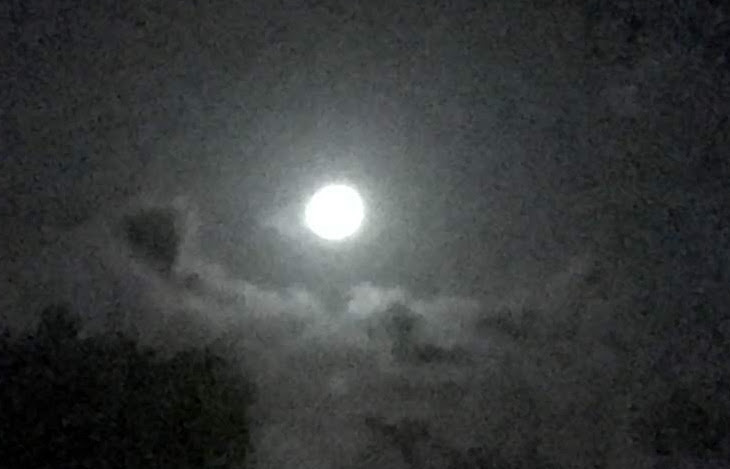
suddenly from my hospital bed bright moon
I think that's a good haiku. The rest are really senryu, human-centred, with a touch of humour.
Doing this was something which soothed me, too.)
Optional Prompt: I wonder what soothes you in times of pain or fear? Please answer this question, in poetry or story.
Guidelines: One post per person, 369 words maximum, on the prompt or any other subject. Please read and comment on others' responses too.
Next week, Magaly will invite us to find inspiration in ‘bittersweet October’.
I promised you some time ago that you wouldn’t entirely lose the Friday features you used to like, which we discontinued in that format. This post, I guess, is a cross between the old ‘Moonlight Musings’ and ‘Roving the Web’, with a bit of ‘I Wish I’d Written This’.
Whether you enjoyed or were challenged by Magaly’s invitation to micro-writing last Wednesday – or both (I was both!) – I guess we can all agree that haiku/senryu are the shortest of the lot. In modern practice, they don’t even have to be 17 syllables (whereas an American Sentence must).
As a post-script to Magaly’s prompt, I’ve been finding out all sorts of stuff while roving the web, which might interest you too.
Senryu
I had been thinking of senryu as a kind of poor cousin to haiku. I understood that senryu are often humorous or satirical, or even downright rude, and are about people in particular, whereas classical haiku are supposed to be about (any other aspect of) Nature in general.
Then I started reading about Issa, one of the acknowledged great haiku masters, and re-reading his haiku too. He loved to write of human nature as much as other kinds. Indeed, his haiku on other parts of Nature often highlight or comment on aspects of human nature, by inference. He endeared himself to readers in his Japan, and to many of his current readers too, by his fellow-feeling with the common people rather than the rich and powerful.
Meanwhile I discovered two facebook sites which showed me that senryu have quite a following in their own right. One is the group Senryu Circle, described as ‘The Home of English Senryu! … a place that EXCLUSIVELY supports senryu … to provide senryu a space to continue and grow.’ Members can post senryu they admire, as well as their own.
The other is Failed Haiku, a page for an e-journal of the same name, subtitled, ‘a journal of English Senryu’, which has just published its 67th issue.
Failed Haiku
The fb page has news of the latest journal issues and so forth. The web site is an even more interesting read. One of the journal editors, Mike Rehling, says, on its About page:
Many years ago, at a haiku meeting, someone asked me what my definition of a senryu was, and I said: “It is just a failed haiku is all.” It was a flip answer, not particularly literary, but I have grown to like it for both its brevity and its lack of preciseness, both of which fit the spirit of senryu perfectly.
They may be failed haiku, but they are not bad haiku! (Even if they are senryu, lol.) Issue 67 includes these recent contest winners: First Prize courtroom— how white the shirt of the rapist Arvinder Kaur
Second Prize first cry . . . I too am born a mother Agnes Eva Savich Third Prize white privilege— a protester asks to use the bathroom Kelley White
In keeping with much current English practice, these don’t observe a 5/7/5 syllable count, but they do respect other qualities of haiku, such as the juxtaposition of two ideas, and the kigo (or turn in thought, here indicated by punctuation) even though the magazine editors do not insist on that feature. Above all, they leave space for readers to enter in with our own minds: that moment of surprise / realisation.
Bad Haiku
I also found, elsewhere, a link to a new collection of school children’s haiku. It was a sad example of the bad teaching of haiku which happens in too many schools! All of them were neatly 5/7/5, all of them stated the obvious, and none of them was the least bit poetic. It’s possible to write lovely haiku in English in 5/7/5 syllables. We have shining examples in this community, in the persons of Magical Mystery Teacher and Gillena, among others. (I still do it myself, now and then.) What I object to is kids being taught that that is the ONLY thing that makes a haiku.
(I won’t give you examples from that publication, however, nor name it. Public shaming only makes people – in this case kids – feel bad, and does nothing to improve matters.)
Issa
Let me close by regaling you with some favourite pieces from dear Issa. David Lanoue, the author of the book I’m reading about him, suggests that when Issa talks of such humble creatures as worms, insects, fish, he’s obliquely referring to people too, and that his overtly down-to-earth verses also refer to ‘Pure Land’ Buddhist teachings about the blessings open to all despite this world’s impermanence and corruption.
(This centred alignment is how they are written in the book, and Lanoue's translations ignore syllable count in English, in the interests of being faithful to the poet's meaning.)
a precious harp a beggar's flute deep in mist
*
this fallen world plastered with cherry blossom
*
in cherry blossom shade no one is a stranger
*
fish unaware of the bucket... a cool evening
*
locked in a staring contest me... and a frog
and one I think we can all relate to just now (maybe we said something like it around last Christmas):
end quickly! this year, you've been an evil one
Now,please regale me and each other with anything you like, old or new, short or long, poetry or prose. (But if prose, no longer than 369 words, please.)
I was so enthused by Magaly’s micro-writing prompt that I rushed to write in every form she suggested. Luckily I double-checked and realised I had to limit it to one only. Some of you, similarly enthusiastic, also wrote more than required and posted them too, so we stood you in the naughty corner (deleted your posts). But we’re all free to share those today, and I certainly will. I’m kinda hopeful of a plethora of micro-writings in this Pantry. But whatever you come up with, I know it will be a feast.
Pop the link to your post in Mister Linky below, one post per person,
and don't forget to have a look at each other's and leave an encouraging
comment if you can. We love it when you leave a comment here, too, if
only to say G'day (or Hi, or whatever that is in your language).
Next Wednesday, Rommy will ask us to write poetry or prose using the
word ‘waystation’ as inspiration.
deli encounter
giving my neighbor
the Vulcan salute
pandemic meal plan
stretching the pasta and sauce
to last a second day
pandemic
my hands raw
from washing
pandemic news
I take a break
to do my taxes
panning for gold
finding hand wipes
inside my purse
pandemic
eating all
the chocolate
out for a quick walk
a wren warbles on the top
of a weeping cherry
pandemic
eating days-old
pizza
pandemic
even the deer
disappear
pandemic
the dogwoods
wait to bloom
pandemic
the anxiety
of extroverts
pandemic
millions of lab rats
in cages
home not alone
a couple watches TV
in separate rooms
empty cities
the sound of a virus
spreading
pandemic spring
the weeping cherries
bloom without me
– By Amy Losak
This is a small selection of haiku and senryu inspired by the current pandemic, which Amy has shared in my facebook group Haiku on Friday as well as on her own facebook page. (Sometimes she goes for the traditional 5-7-5 syllables per line; most are simply short-long-short, which is acceptable nowadays too.) Although they can't help but build up a collective picture, each is to be read separately. I just grabbed some of the ones I like best – so far – from even more which she's been posting over recent days. (These were not necessarily written to follow each other in the sequence you see here.) I don't expect she'll run out of inspiration any time soon!
The first two above were labelled as being written before the stay-at-home orders, and I read them in a facebook group she recently asked me to join: Haiku in the time of COVID-19. (The group is administered by Johannes S. H. Berg, whose own one-liner there is superb: 'we'll meet as winds over the mustard field'.)
In fact, although I plucked individual pieces from Amy's various postings, the sequence I arrived at is roughly chronological and does (even unintentionally) reflect the progress of our response to the disease, from stifling a cough at the checkout line (before lockdown) to couples watching TV in separate rooms!
And yes, by now a number of people are writing on this topic – after all, it's the subject uppermost in all our minds – and even writing haiku on it. Just now, of course, members of this community have been focusing our attention on it together, in response to Magaly's Weekly Scribblings #15. (Scroll back one post if by any chance you missed that.) And I have recently discovered that Rajani, who blogs at Thotpurge and is no stranger to this community, has been doing a wonderful series of haibun since March 24, recording her reflections during India's lockdown, under the ongoing title Curfew – deeply thoughtful and original work, as one has come to expect from her.
But Amy's haiku on the subject, which began even earlier, were the first I saw – surely among the first to be written so consistently, with such commitment to documenting all the small yet momentous experiences involved. I was immediately enraptured, by the verses and the whole concept. I love the pithiness with which she uses this form to address the subject; and I love that she is doing such an extensive series of them, presenting the topic with many fine shades of meaning. I like that I instantly identify with so many of them (e.g. the third above) and also the momentary surprises, or surprised recognition, in others (such as 'pandemic / the anxiety / of extroverts'... I'm an introvert, you see).
Most of them are senryu, dealing with human behaviour, sometimes with a humorous twist. The few nature-based haiku here might not seem to add up logically – but then, when was poetry about logic? In haiku, juxtapositions of ideas or images can allow for a wealth of meaning in the unsaid. So the dogwoods and deer, whilst presumably factual, might also be suggestive of a mood; and the final piece above is all too clear, and poignant.
When I asked her for some details about herself and her writing, Amy kindly sent me the following, adapted from her bio-sketch on the Haiku Foundation’s website (its registry of poets):
Amy Losak is a veteran public relations professional specializing in healthcare and science media relations. After decades of excelling at top PR agencies in New York City, today Amy freelances and consults.
Amy's mother, Sydell Rosenberg , was a New York teacher and published writer, and a charter member of the Haiku Society of America in 1968. After Syd's unexpected death in 1996, her family decided to publish one of her poetry manuscripts for children. One of Syd's long-held dreams had been to publish a picture book.
In 2018, Penny Candy Books released Syd's H Is For Haiku: A Treasury of Haiku from A to Z, with illustrations by Sawsan Chalabi. This collection consists of 26 "city haiku"; a number were first published decades ago in leading journals. It also includes a short essay by Sydell which first appeared in Wind Chimes #3, 1981, and a new introduction by Amy (available on Amazon, etc.).
H Is For Haiku has been honored by the National Council for Teachers of English as a "Notable Poetry Book" in 2019.
Amy also is a member of a group of award-winning Jewish children's authors and illustrators, all women, The Book Meshuggenahs.
Today, Amy writes and publishes her own short poetry. She hopes to publish a second picture book that combines her and Sydell’s haiku.
Penny Candy Books also has on its website a very nice, and more personal account, of Amy's own development as a writer, as well as the details about her mother's book.
AtThe Book Meshuggenahs, Amy says (and I very much agree):
Haiku poems are the briefest form of poetry, but arguably the most expansive. While they are traditionally taught to be written in three lines of 5-7-5 syllables, today’s haiku are usually shorter. Content–capturing moments, experiences, feelings, observations–is more important than syllable count. Haiku poetry celebrates “small moments” in our daily lives, and makes them “big.”
It seems to me a particularly apt form of expression whilst so many of us are in social isolation, inevitably turning our immediate focus on the small and everyday, even while staying up-to-date on the global picture.
Material shared here is presented for study and review. Poems, photos, and other writings and images remain the property of the copyright owners, usually the authors.